
In commercial bakeries, food processing plants and cold-storage warehouses, mobile racks are essential for daily operations. But one common issue continues to frustrate operators, maintenance teams, and production staff alike – casters stiffening, seizing up, or ceasing to roll properly in freezer environments.
While many assume ice buildup is the main cause, the real issue is that the wrong grease is inside the caster bearings and swivel assemblies. When standard lubricants are exposed to low temperatures, they can thicken, harden, or freeze entirely, losing their ability to protect bearings and swivel components and turning smooth-rolling racks into heavy, cumbersome equipment that’s difficult to move. This slows productivity, increases worker safety risks, and accelerates equipment wear.
Read on to learn more about why using the wrong grease can cause your casters to freeze – and what you can do about it.
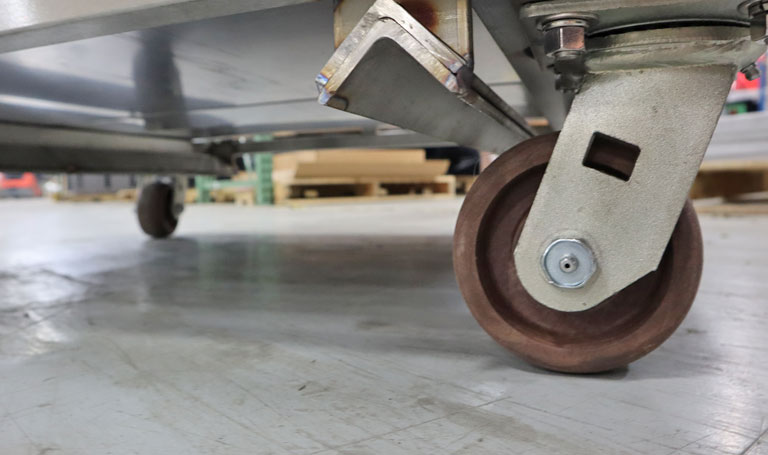
How Grease Can Cause Casters To Fail
Most casters contain grease inside their wheel bearings, swivel raceways, axle assemblies and kingpins. This grease reduces friction and allows the caster to rotate smoothly under heavy loads.
However, not all grease is designed for freezer or proofer environments. At Schaumburg Specialties, we typically find that casters come to us from a manufacturer already lubricated, with a standard grease that’s not freezer compatible. Indeed, many manufacturers lubricate casters with a general purpose grease that’s designed for moderate temperatures and not specifically for extreme temperatures (either hot or cold).
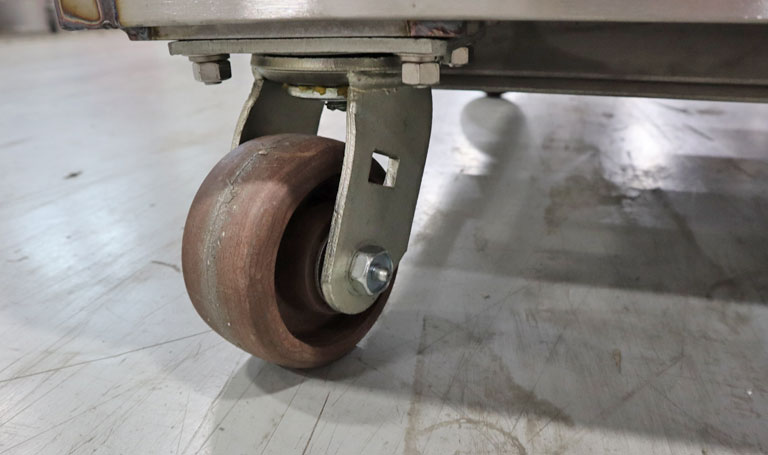
Grease, like most lubricants, is primarily designed to reduce friction and wear between moving surfaces. Because friction generates heat, effective lubrication helps to reduce heat generation and, therefore, grease is inherently capable of withstanding a certain amount of heat.
However, grease must also remain stable when exposed to elevated temperatures. Every grease has its own temperature limits, typically determined by the base oil, thickener and additives used in its formulation. As temperatures rise, grease can leak out of the lubricated area, oxidize and chemically degrade, lose its lubricating properties and have its oil separate from the thickener. All this can eventually lead to caster failure.
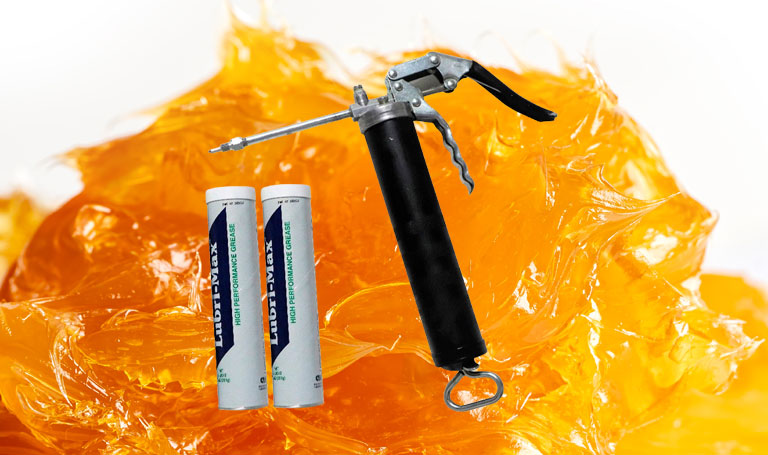
In low temperatures, standard food-grade grease can become highly viscous, stiffen dramatically, lose lubrication properties and stop flowing properly. As the grease thickens, rolling resistance increases, eventually causing the wheel to drag, swivels to lock, bearings to seize and racks becoming very difficult to maneuver.
In freezer conditions, the caster may seem completely frozen. Members of the sales team at Schaumburg Specialties say that customers often comment how they have to ‘kick’ casters into action when casters stiffen completely.
Grease breakdown can become even more pronounced when facilities move racks between warm, humid proofers and deep freezers. Rapid thermal cycling (i.e, repeated heating and cooling) causes standard, often lower-quality lubricants to separate or lose consistency. Over time, this leads to metal-on-metal wear, corrosion, bearing damage, and in the end, complete caster failure.
The Solution: Low-Temperature Food-Grade Grease
Facilities operating in freezers, blast chillers and proofers should use food-grade lubricants specifically engineered for cold environments. High-performance grease is designed to remain fluid in sub-zero temperatures, resist moisture contamination and condensation (which can cause rust on bearings, axles and swivels), maintain consistent lubrication during thermal cycling and prevent bearing seizure and swivel lock-up. By maintaining stable viscosity in extreme conditions, high-performance grease helps ensure smooth caster movement and longer equipment life.
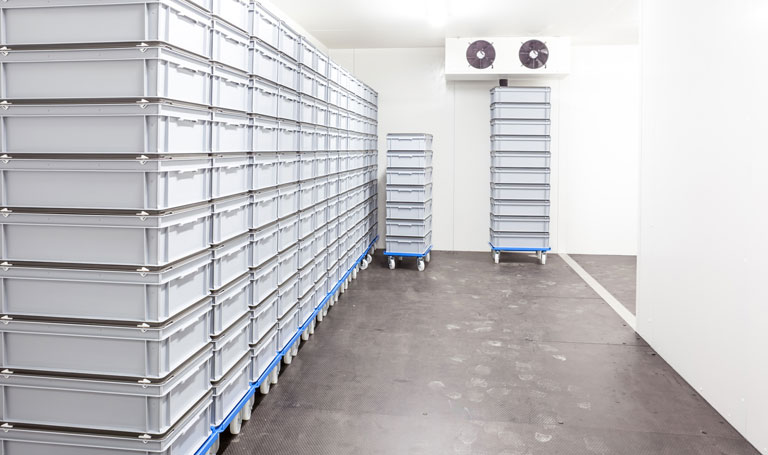
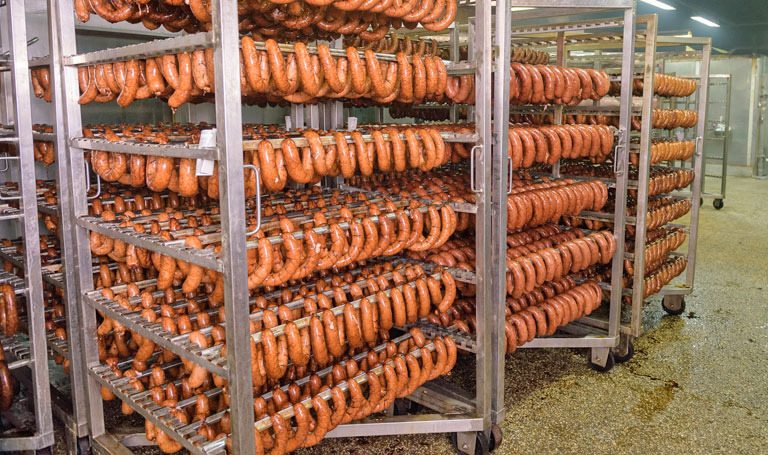
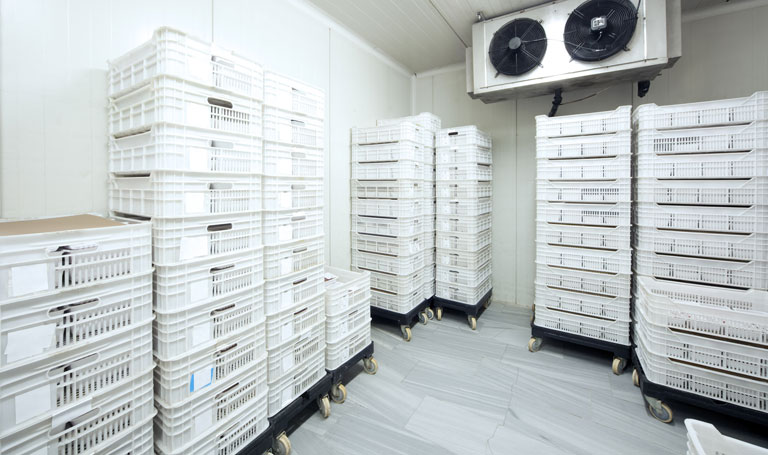
It’s important to use high-performance grease in cold conditions
Why Simply Adding New Grease Doesn’t Work
At Schaumburg Specialties, a common mistake that we see a lot is the application of high-performance food-grade grease directly on top of the existing lubricant inside the caster assembly. This approach is ineffective because the new grease cannot properly bond with or penetrate the existing lubricant. Instead of improving performance, it often simply mixes with old grease, traps moisture and contaminants, fails to reach the bearing surfaces and provides inconsistent lubrication. As a result, the underlying issue remains unresolved.
Why Proper Grease Replacement Is Essential
To restore proper caster performance in freezer environments, it’s recommended that the original lubricant is fully removed and the caster washed out before new high-performance food-grade grease is applied. However, this process is not straightforward. In many cases, old grease has already hardened inside the caster’s bearings and raceways, making complete removal difficult without proper cleaning methods or disassembly.
At Schaumburg Specialties, we recommend removing the caster from the rack before submerging the caster bracket in a solvent to dissolve the old grease. Once the lubricant has been broken down, a compressed air gun can be used to remove any remaining residue and solvent from the assembly.
Caption: Eric Schaumburg removes old lubricant from casters
Once the caster is completely cleaned and dried, a new high-performance food-grade grease specifically designed for freezer applications can be applied. This helps ensure smooth rolling performance, reduced swivel resistance, and longer caster life in cold and high-moisture environments.
While effective, this process is both time-consuming and labor-intensive. In many cases, replacing worn casters with new units that have already been lubricated with freezer-grade grease is the more practical solution. Whenever we build new racks in our workshop in Schaumburg, IL we make sure that high-performance food-grade grease is applied directly to the caster assemblies before installation. Proper lubrication from the outset helps prevent premature grease failure, frozen bearings, and mobility issues commonly experienced in freezer applications.
When you’re ordering your racks from Schaumburg Specialties, be sure to tell us what application your racks are for – oven, proofer, freezer? – and we can ensure that the right type of grease is applied to your casters before installation. Connect with our team today and tell us what you need – we will make it happen!
Don’t Forget To Maintain Your Casters
Of course, to ensure a smooth-running production line, good maintenance of your racks – particularly your casters – is essential! Greasing your casters regularly and with the right type of grease is a crucial part of caster maintenance and it’s something that you can easily do yourself. Head over to our Learning Center for some top caster maintenance tips, check out our essential video guide to greasing commercial rack casters (below) and download our Caster And Wheel Maintenance Program from our website.
Our step-by-step guide to greasing casters
If you have any questions or queries, please contact our friendly, knowledgeable team via our website or call us at 866 489 1574. We are always delighted to assist!
Conclusion
When casters freeze in cold-chain environments, the real problem is often hidden inside the wheel assembly itself.
The standard grease used by many manufacturers is not designed for rapid temperature changes or sub-zero conditions. As lubricants thicken and fail, rolling performance suffers – creating unnecessary strain on workers and equipment. For long-term reliability in cold-chain environments, simply “topping up” grease is not enough. The system must be properly cleaned and re-lubricated with a high-performance, food-grade grease designed specifically for freezer conditions.
Using the correct grease – as well as ensuring regular caster maintenance – can significantly improve rack maneuverability, worker safety, production speed and caster lifespan, with fewer wheel replacements, smoother workflow and reduced downtime.